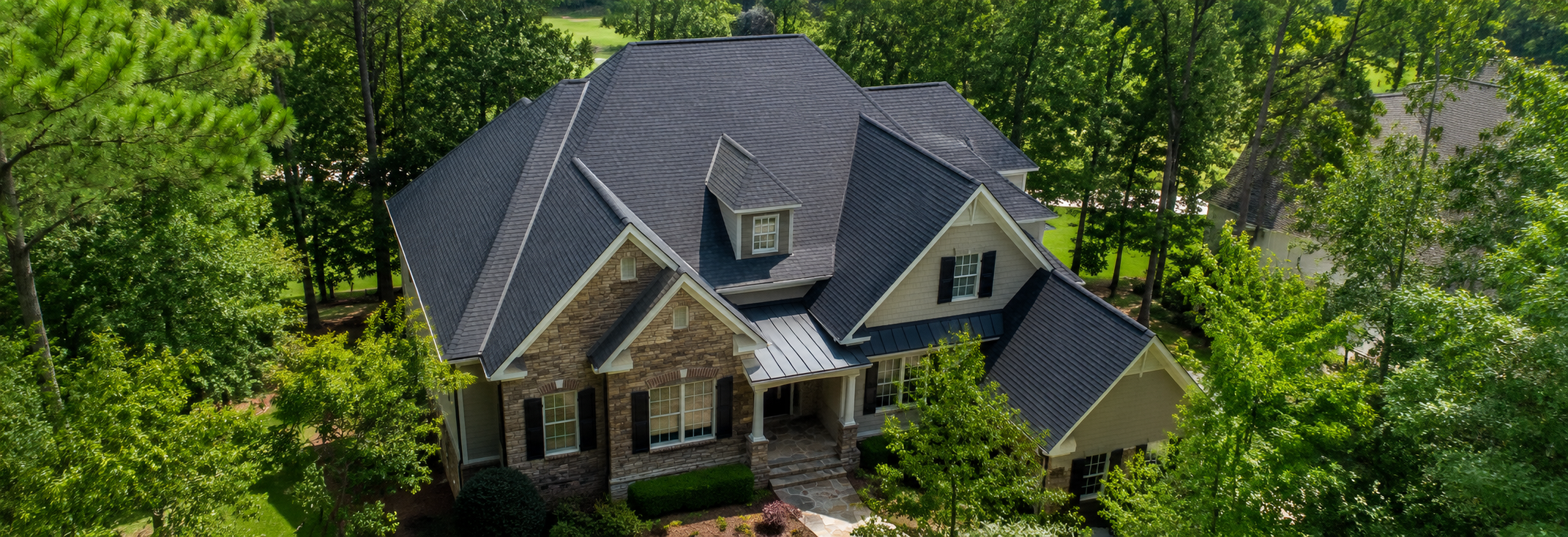
Here is the problem: the roof on your home is doing its job so quietly, and so completely, that most homeowners treat it like it does not need attention at all. No warning lights. No unusual sounds. Just a dark, flat surface up there collecting pine needles and rainwater while your investment slowly erodes from the outside in.
Then a stain appears on the bedroom ceiling. Or a shingle shows up in the yard after a storm. Or your insurance company sends a renewal notice with a new condition: roof inspection required within 90 days.
Georgia homeowners face a specific set of roofing challenges. The combination of summer heat that pushes attic temperatures above 150 degrees, humidity that feeds moss and algae, heavy pine canopy that deposits debris year-round, and severe storm seasons that test every penetration and seam means that roof maintenance here is not optional. It is the difference between a roof that lasts 25 years and one that fails at 17.
Sure Thing Roofing Contractor has served Peachtree City, Fayetteville, Newnan, and the surrounding Fayette and Coweta County communities since 2015. With more than 60 five-star Google reviews and Atlas Pro+ certification, we have seen what happens to roofs that are maintained and what happens to roofs that are not. The gap is significant. This guide gives you the practical maintenance checklist that closes it.
How Often Should You Clean Your Gutters in Georgia?
Georgia homeowners with tree canopy overhead should clean their gutters at least twice per year — once in late spring after oak pollen and seed pods have dropped, and once in late fall after pine needles and hardwood leaves have settled. Homes directly under heavy pine canopy need a third cleaning in late summer.
Most maintenance guides say "clean gutters twice a year." That is accurate for a home on a flat lot in a cleared neighborhood. It is not accurate for most of Peachtree City.
This area sits under an unusually dense mix of pine, oak, sweet gum, and poplar canopy. That means debris is falling onto your roof in three distinct waves:
- Spring (March through May): Oak pollen, sweet gum pods, and maple helicopters create a layer of material that packs into gutters and downspout openings. The pollen alone is viscous enough to form a paste that restricts flow even before leaf mass arrives.
- Summer (July through August): This is the window most homeowners miss. Longleaf and loblolly pine needles drop steadily through Georgia summers. Pine needles are more dangerous than leaves because they compact rather than decompose. A mat of pine needles in a gutter retains moisture continuously against the fascia board — and that sustained contact is what starts wood rot, not a single rain event.
- Fall (October through November): Hardwood leaves arrive in volume. By this point, if the gutters have not been cleared since spring, the downspouts are often already partially blocked. A heavy fall rain can back water up behind a gutter clog and push it under the drip edge.
The practical schedule for Peachtree City homeowners: late May, late August, and early December. Three cleanings per year if you have significant tree cover. At minimum, late spring and early December.
When gutters overflow or pull away from the fascia, the water does not just fall harmlessly to the ground. It saturates the fascia board, wicks into the soffit, and begins the process of moisture intrusion at the roof edge — one of the most common starting points for serious roof repair work. The gutter is a system that feeds everything below it. Keep it clear.
Not Sure What Shape Your Gutters Are In?Sure Thing Roofing Contractor's no-cost inspection covers gutter attachment, pitch, seam integrity, and downspout discharge. We give you a written report. No obligation.
Schedule No-Cost Inspection
How Do You Prevent Moss and Algae on a Georgia Roof?
Preventing moss and algae on a Georgia roof requires reducing shade and moisture exposure where possible, installing zinc or copper strips near the ridge line, and choosing shingles with built-in algae resistance. Active moss should be treated by a professional — pressure washing strips protective granules and voids most manufacturer warranties.
Georgia's humidity does not just feel oppressive in August. It creates near-perfect conditions for biological growth on north-facing and shaded roof sections from about September through May, when temperatures drop enough for moss to establish.
There is an important distinction between moss and algae that most homeowners do not know:
- Algae (the dark streaking): Gloeocapsa magma bacteria creates the dark gray or black streaks you see running down many Georgia roofs. It is primarily cosmetic — it indicates moisture presence and signals that the conditions for moss are nearby, but on its own it does not lift shingles.
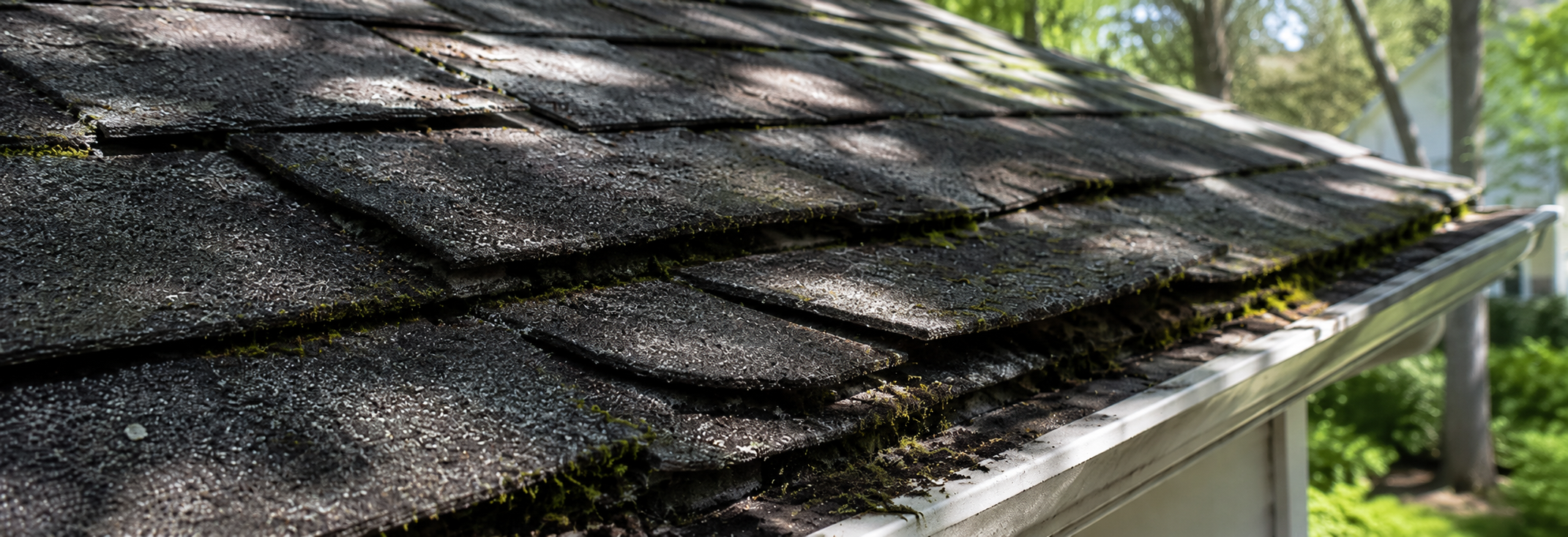
- Moss: Moss physically lifts the edges of shingles. The rootlike structures called rhizoids anchor into the granule layer and peel shingle edges upward over time. A lifted shingle edge is an open invitation for wind-driven rain. Moss also retains moisture against the shingle surface continuously, which accelerates granule loss and softens the underlying fiberglass mat. This is structural damage, not cosmetic.
- Lichen: Lichen is the most stubborn of the three. It bonds chemically to the granule surface. Removing it without damaging the granules requires professional treatment.
What actually works for prevention:
- Zinc or copper ridge strips: When rain hits these strips, they release trace metal ions that travel down the shingle surface and inhibit biological growth. The protection radius from a ridge strip is roughly eight to ten feet of shingle surface below the strip. They are effective, passive, and do not require re-application.
- Algae-resistant shingles: Sure Thing Roofing Contractor installs Atlas Shingles with Scotchgard Protector — a technology developed specifically to address algae growth in high-humidity climates like ours. Atlas Pro+ certification means we are the local source for this product.
- Professional biocide treatment for active growth: If moss or lichen is already present, the correct response is a low-pressure biocide application, not a power washer. Pressure washing strips granules, which are the primary UV and moisture barrier on an asphalt shingle. Stripping granules to remove moss trades a surface problem for an accelerated aging problem.
Why Does Flashing Inspection Matter More Than Shingle Condition?
Flashing inspection matters more than shingle condition because most residential roof leaks originate at penetration points — chimneys, skylights, pipe boots, valleys, and wall intersections — where flashing seals the gap between the roofing surface and a fixed structure. Shingle deterioration is visible from the ground; flashing failure typically is not.
When homeowners think about roof maintenance, they think about shingles. That is the natural instinct — shingles are what you can see from the yard. But the leading source of residential roof leaks is not shingle failure. It is flashing failure at penetration points.
Flashing is the metal or synthetic material that creates a waterproof seal at every place where a fixed structure interrupts the continuous shingle field:
✓
Chimney FlashingStep flashing and counter-flashing around the entire chimney perimeter — four separate sealing points, each susceptible to separation
✓
Pipe BootsRubber pipe boot collars harden and crack in Georgia's UV exposure and temperature cycling, typically within 15 to 20 years
✓
SkylightsStep flashing at the skylight frame lifts in wind events; the curb seal degrades under sustained UV exposure
✓
Valley FlashingValleys carry the highest volume of water during a storm; any separation or corrosion creates an immediate leak path
✓
Wall IntersectionsWhere a roof surface meets a vertical wall — dormer sides, bump-outs, additions — step flashing and kickout flashing seal the joint
✓
Ridge and Hip CapsThe highest, most wind-exposed section of the roof; lifted ridge caps are a common entry point after severe weather
The difficulty with flashing is that most failure modes are not visible from the ground. A chimney flashing that has separated two inches at the counter-flashing step shows nothing from street level. A pipe boot collar with a one-centimeter crack looks intact from 30 feet away. The only way to find these failures before they let water in is a professional inspection with someone on the roof who knows where to look.
This is the gap between homeowner maintenance and professional maintenance. A homeowner can clean gutters, remove debris, look for obvious missing shingles. A licensed contractor inspects every penetration point systematically. That combination — homeowner attention between visits, professional inspection annually — is what catches problems while they are still inexpensive to repair.
How Does Poor Attic Ventilation Damage Your Roof From the Inside?
Poor attic ventilation damages a roof from the inside by trapping heat against the underside of the roof deck in summer, accelerating shingle aging from below, and allowing condensation to build on the roof deck in winter, creating conditions for mold and structural wood rot that are invisible until significant damage has already occurred.
This is the roof damage mechanism that catches almost every homeowner off guard because the damage is invisible from the outside until it has already progressed significantly.
Georgia summers are relevant here in a specific way. On a typical 90-degree Peachtree City afternoon, a poorly ventilated attic space can reach 150 to 160 degrees Fahrenheit. That extreme heat does two damaging things simultaneously:
- It bakes the shingles from below. Asphalt shingles age due to temperature cycling and UV exposure. Adding extreme heat from below the deck accelerates the asphalt's chemical breakdown, causing shingles to dry out, curl, and lose granules years ahead of their rated lifespan. Most shingle manufacturers explicitly state that adequate attic ventilation is required to maintain the warranty. If your attic has ventilation problems and your shingles fail early, the warranty may be voided.
- It pushes warm, humid air against the underside of the roof deck. When outdoor temperatures drop in the evening or during winter, that trapped warm moist air condenses on the cooler wood surfaces above. This moisture cycle feeds mold growth on the decking and begins softening the OSB or plywood over time — a process that does not show on the exterior until the deck is compromised enough to feel spongy underfoot.
The standard for residential attic ventilation is one square foot of net free ventilation area per 150 square feet of attic floor space, split equally between soffit intake at the eaves and exhaust ventilation at the ridge. Balanced intake-to-exhaust is critical: an attic with good ridge vents but blocked soffits is still an oven because there is no airflow pathway.
Signs that warrant a ventilation check: shingles that are curling or blistering on an otherwise new-looking roof, ice dam formation in the rare Georgia freeze, or mold-like staining on attic sheathing visible during an inspection. If you have any of these signs, the ventilation problem is already costing you roof life. A professional inspection can diagnose the specific deficiency and recommend the correct fix before the deck needs replacement.
What Is the Right Year-Round Roof Maintenance Schedule for Peachtree City Homeowners?
Peachtree City homeowners should follow a three-season maintenance schedule: a spring cleaning after oak pollen season ends, a late-summer gutter clearing before fall debris arrives, and a professional inspection each fall after storm season that checks every system component and produces a written report of findings.
Spring — March Through May
- Clear oak pollen, sweet gum pods, and debris from gutters and valleys
- Inspect for any winter damage: lifted ridge caps, cracked pipe boots, caulking failures at penetrations
- Trim overhanging branches back at least six feet from the roof surface
- Check attic for moisture staining that developed over winter
- Schedule professional inspection if the roof is 15 years or older or you have not had one in 12 months
Summer — July Through August
- Clear pine needle accumulation from gutters and valleys — this is the window most homeowners skip
- Check downspout discharge distance: water should discharge at least six feet from the foundation
- Check attic temperatures if accessible — excessive heat is a ventilation indicator
- After any hail or severe thunderstorm event, call for a professional post-storm assessment
Fall — October Through November
- Clear hardwood leaf accumulation after peak drop
- Schedule professional annual inspection to assess storm season wear
- Confirm gutter attachment is still secure after summer storms
- Check soffit and fascia for any signs of moisture damage from summer gutter overflows
- Ensure all flashing sealant points are intact before winter rain season
Winter — December Through February
- Keep gutters clear through late fall to handle winter rain volume
- After any rare ice or freeze event, check for lifted shingles or gutter damage
- This is a good window to book a professional inspection for spring work before contractor schedules fill up
- Review any written findings from your fall inspection and schedule recommended repairs
The homeowner steps above are things you can do from the ground or with a ladder to the gutter line. They matter. They catch the obvious things and keep your drainage system functioning. But they do not replace a professional inspection, because the most expensive failure points — flashing separations, pipe boot cracks, attic moisture, and granule loss patterns — require being on the roof with trained eyes to find.
When Should You Stop DIY Maintenance and Call a Roofing Professional?
You should call a professional roofing contractor any time you need to walk on the roof surface, when you notice interior ceiling staining, after any significant storm, when shingles are curling or granule loss is evident, or when your roof is approaching 15 years of age and has not had a professional inspection in the past 12 months.
The boundary between homeowner maintenance and professional maintenance is straightforward: anything that requires standing on the roof surface should be handled by a licensed contractor with fall protection equipment and liability insurance. That includes every flashing inspection, any repair work, and any close-up assessment of shingle condition.
Beyond the safety issue, there are specific signs that warrant an immediate professional call regardless of your maintenance schedule:
- Interior ceiling stains or drips. Water is already inside the structure. The question is how long it has been there and how far it has traveled. The entry point is almost never directly above the visible stain.
- Shingles in the yard or driveway after a storm. Missing shingles are an active vulnerability. Every subsequent rain event enters directly at the exposed deck area.
- Visible granule accumulation in gutters. A small amount of granule shedding is normal for new shingles. Heavy, ongoing granule loss in mature shingles means the protective coating is depleting and the shingle lifespan clock is accelerating.
- Sagging or soft spots on the roof surface. Deck compromise. This is not a repair situation — this requires immediate professional evaluation for safety reasons.
- Your roof is 15 or more years old and has never had a professional inspection. At this age, flashing sealants, pipe boots, and ridge cap adhesion are all approaching end-of-life simultaneously. You need a professional baseline assessment, not a visual from the ground.
Sure Thing Roofing Contractor offers a no-cost inspection for homeowners throughout Peachtree City, Fayetteville, Newnan, Senoia, and the surrounding area. We send a licensed professional to your home, perform a complete roof inspection, and deliver a written report of findings — no sales pressure, no obligation. The inspection costs you nothing. What we find either gives you peace of mind or identifies something worth knowing about before it becomes a larger problem.
 Sure Thing Roofing Contractor