Atlas Pro+ Certified
BBB Accredited — A+
Licensed · Bonded · Insured
Lifetime Shingle Warranty
5-Year Written Labor Warranty

Bringing the Outdoors In — Roof Skylights and Storm Damage Repair

Sure Thing Roofing Contractor • Peachtree City, GA • Atlas Pro+ Certified • More than 60 Five-Star Reviews
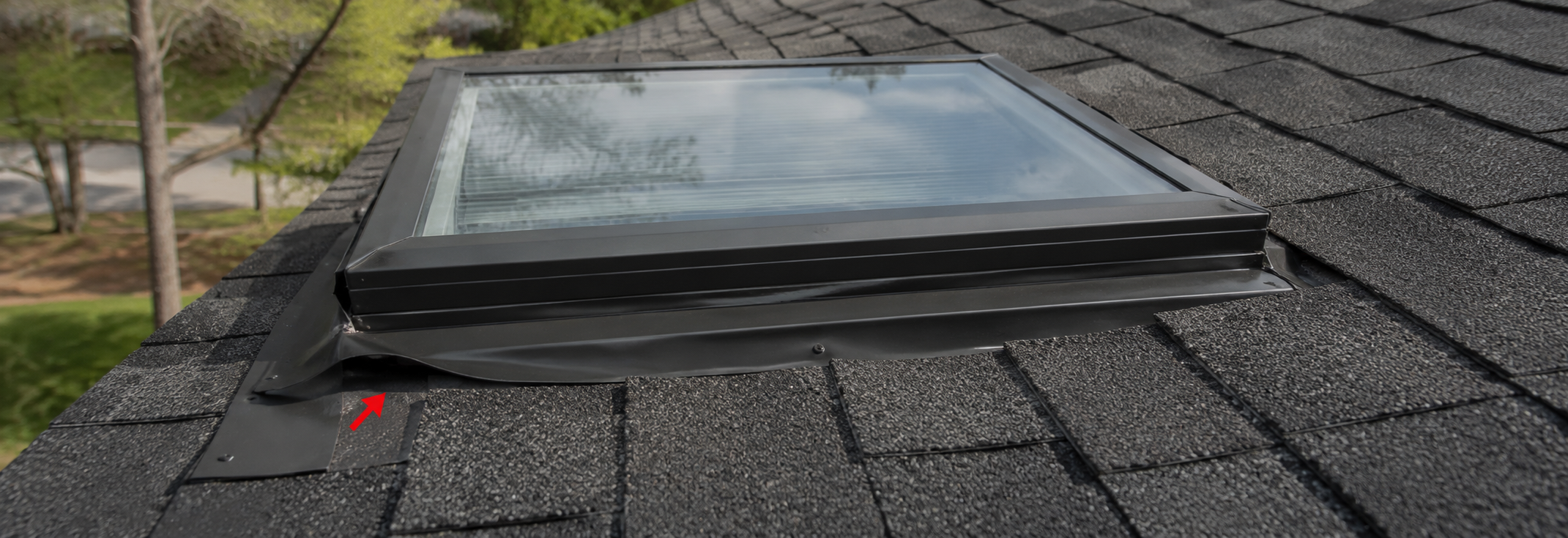
Exterior view of a residential roof skylight showing subtle lifted flashing at the upper corner

Skylights are the one roofing component that homeowners interact with every day from inside the house — the natural light they provide makes rooms feel larger and brighter, and they are a genuine quality-of-life feature that adds value to a home. That daily familiarity also means homeowners are well-positioned to notice the first interior symptoms of a problem, if they know what to look for.

The challenge is that skylight storm damage rarely shows up as an obvious drip. The typical damage path starts with a flashing lift that is invisible unless you are on the roof, or a glazing seal failure that does not produce condensation between the panes until weeks after the storm that caused it. By the time water appears on the ceiling drywall around the light shaft, it has already traveled through the step flashing, behind the curb framing, and along the ceiling joists before dripping onto the finished surface below.

Sure Thing Roofing Contractor — with more than 60 five-star Google reviews and Atlas Pro+ certification — assesses and repairs skylight flashing, frames, and glazing as part of complete storm damage restoration throughout Peachtree City, Fayetteville, Newnan, McDonough, Griffin, and the surrounding communities. This guide gives you the complete diagnostic picture so you can identify a skylight problem early — and understand what a professional assessment should cover before you file an insurance claim.

How Georgia Storms Damage Skylights

Georgia storms damage skylights through three primary mechanisms: hail impact that fractures glazing or disrupts the edge seal on double-pane units; wind that lifts step flashing along the curb sides; and the combined effect of hail impact force on the aluminum frame that distorts the curb geometry and breaks the glazing bead seal. Each failure mode allows water intrusion through a different entry point, and each is invisible from inside the house until the damage is well established.

The Fayette-Coweta corridor — where Peachtree City sits between the convergence of Interstate 75 and Interstate 85 storm tracks — sees the full range of severe weather Georgia produces: straight-line winds from 50 to 70 miles per hour, hail from three-quarter inch to golf-ball size, and the extended torrential rain that follows frontal passages and tropical systems moving inland from the Gulf Coast. Each of these acts on a skylight differently.

Hail Impact — Glazing Fracture and Seal Failure

Modern skylights use either single-pane tempered glass, double-pane insulating glass units, or acrylic/polycarbonate glazing. Each responds to hail differently:

  • Tempered glass: Resists small hail well but shatters completely under significant impact. When tempered glass fails, it shatters into small relatively safe fragments and the failure is immediately obvious. A shattered skylight is an emergency requiring temporary covering and immediate roof repair to prevent interior water intrusion.
  • Double-pane insulating glass units (IGUs): The outer pane can withstand significant hail without cracking, but the impact vibration can disrupt the edge seal that holds the inert gas fill and maintains the thermal separation between panes. Seal failure does not create an immediate water path — it shows up as fogging or condensation between the panes within days to weeks of the impact event. A fogged IGU is a failed unit and must be replaced.
  • Acrylic and polycarbonate: Common on older skylights. Acrylic crazes and fractures under hail impact; polycarbonate dents but rarely cracks. Crazed acrylic allows UV degradation to accelerate rapidly and the crazing pattern creates micro-channels for water infiltration even before visible cracking develops.

Beyond the glazing itself, hail that strikes the aluminum frame along the top edge of the skylight curb compresses the glazing bead — the rubber or foam seal between the glazing unit and the aluminum frame channel. When this compression seal is disrupted, water can enter the frame-to-glazing joint and travel down the interior of the curb. This failure is invisible from both inside and outside without a close-up inspection of the top frame edge.

Wind — Step Flashing Lift and Frame Separation

Step flashing is the system of overlapping L-shaped metal pieces installed along the sides of the skylight curb where it intersects the roof surface. Each piece overlaps the shingle course below it and is covered by the course above — creating a waterproof staircase along both sides of the skylight opening. It is the most critical waterproofing element in the entire skylight installation, and it is also one of the most vulnerable to wind uplift.

When wind gets beneath a lifted shingle at the skylight perimeter, the pressure can raise step flashing legs off the curb surface. A step flashing piece lifted only a fraction of an inch during a wind event may re-seat partially after the wind passes — leaving a gap that is not visible from the ground and that allows water infiltration during every subsequent rain event. This is why skylights on homes that have been through multiple Georgia storm seasons need a close-up flashing inspection even if no interior symptoms are present.

At the high side of the skylight — the uphill edge where the roof surface meets the top of the curb — a saddle or cricket is installed to divert water around the frame. If the saddle flashing separates from the curb at its edges, water collects at the high side and is held against the frame joint rather than diverted. This failure mode is particularly common after thermal cycling has degraded the sealant at the saddle-to-curb junction.
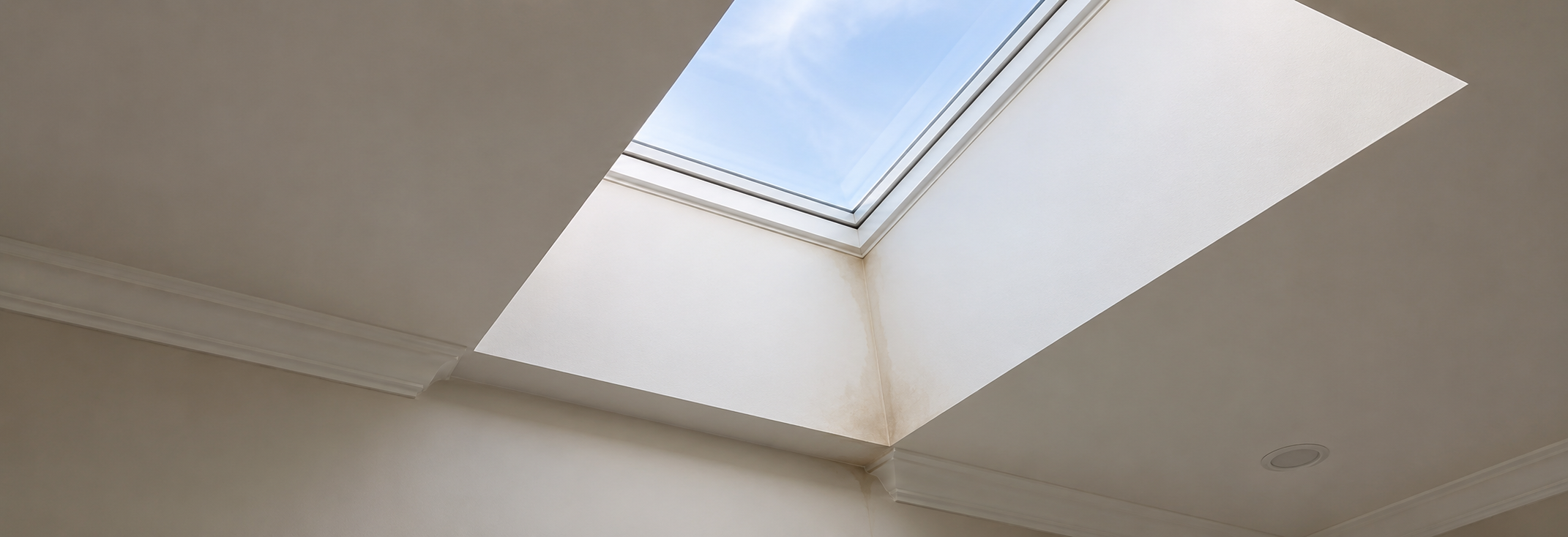
Interior view upward toward a residential skylight showing early water staining at the corner of the light shaft frame

Signs of Skylight Storm Damage From Inside Your Home

Interior signs of skylight storm damage include water staining on the ceiling or light shaft drywall around the frame perimeter, condensation or fogging between double-pane glazing that was not present before the storm, drafts around the interior frame edge during wind events, and visible daylight or light leakage along the interior frame channel that indicates a gap in the frame-to-curb seal.

The interior of the home is often where skylight storm damage first becomes detectable, even though the actual failure is on the exterior. Knowing what to look for — and understanding what each symptom indicates about the exterior failure — allows you to accurately describe the problem to a contractor and helps you understand why a particular repair scope is appropriate.

1
Water Staining on Ceiling or Light ShaftBrown or tan staining on the drywall around the skylight frame or on the light shaft walls below it is the clearest interior indicator of active water intrusion. The stain location is often not directly above the entry point — water travels along framing members before dripping onto the finished surface below. Map the full stain extent before attributing it to a specific flashing location.
2
Condensation Between PanesFogging or condensation between the panes of a double-pane skylight that was not present before the storm event indicates the insulating seal has failed. The desiccant in the spacer bar has been saturated and the unit is no longer performing as a sealed insulating glass unit. This is a manufacturing failure caused by the storm impact — not a maintenance issue — and is typically insurance-claim eligible.
3
Drafts at the Frame PerimeterIf you can feel air movement around the interior frame edge during windy conditions, the frame-to-ceiling or frame-to-curb seal has been disrupted. This indicates the skylight frame has moved on its curb mounting, possibly from hail impact or wind pressure on the glazing unit. Drafts precede water infiltration by the same gap that allows air movement.
4
Visible Light Leak at Frame ChannelStanding below the skylight in a darkened room during daylight hours — look for any light visible along the interior frame channel edges. A continuous, uniform light view through the glazing is normal. A light leak along a frame edge indicates a gap between the frame and the curb or ceiling framing that should not be there.

Signs of Skylight Storm Damage From the Exterior

Exterior signs of skylight storm damage include cracked or crazed glazing visible from the roofline, dented aluminum frame along the top and side edges, lifted or separated step flashing at the curb sides, saddle flashing that has separated from the top curb edge, and granule accumulation in the valley formed between the skylight curb and the adjacent roof surface.

Exterior skylight damage requires a roof-level inspection to diagnose accurately. Ground-level inspection with binoculars can identify obvious glazing fractures and severe frame denting, but step flashing condition and saddle integrity require close inspection at the roofline. This is a primary reason why a professional storm assessment is essential before filing an insurance claim — the exterior damage documentation must be specific and complete for the claim to be properly scoped.

What a Professional Skylight Storm Assessment Documents

  • Glazing condition: Cracked, crazed, punctured, or double-pane seal failure — with photographs of each affected unit
  • Frame condition: Denting or distortion of the aluminum frame on each side, top, and bottom edges — particularly the top edge where the glazing bead seal is most vulnerable to compression damage
  • Step flashing integrity: Each step flashing piece inspected for uplift, separation from the curb face, or displacement from its position beneath the overlying shingle course
  • Saddle/cricket flashing: Separation at edges, sealant condition at the saddle-to-curb junctions on both sides
  • Curb integrity: Wood curb condition for rot or storm-related structural movement; curb-to-deck fastening
  • Adjacent roof surface: Hail damage to shingles within 18 inches of the skylight perimeter, which affects flashing integrity and must be documented as part of the same storm event

Skylight Showing Interior Symptoms After a Recent Storm? Sure Thing Roofing Contractor provides a no-cost inspection that covers your complete roof system including skylight flashing, frame, and glazing — with written documentation for your insurance claim. Schedule your inspection.

Get No-Cost Inspection

Repair vs. Replacement — How to Make the Right Decision for Your Skylight

The repair-versus-replacement decision for a storm-damaged skylight depends on three variables: the condition of the glazing, the structural integrity of the aluminum frame, and the age of the unit. Cracked or seal-failed glazing requires at minimum a glazing replacement; distorted frames require full unit replacement; skylights older than fifteen to twenty years that have sustained storm damage are typically worth replacing in full because existing sealant and frame degradation make repairs a short-term solution at best.

Not every storm-damaged skylight requires full replacement. And not every storm-damaged skylight can be adequately repaired. Understanding which category your skylight falls into before the contractor arrives gives you the context to evaluate the proposed scope — and to ask the right questions if the scope seems too narrow or too broad.

Repair Is Appropriate When

  • Glazing is intact and double-pane seal is functioning (no condensation between panes)
  • Frame is structurally sound with no distortion at glazing bead channel
  • Damage is limited to step flashing displacement or sealant failure at saddle edges
  • Skylight is under ten to twelve years old and frame/gasket condition is good
  • The interior water damage is recent and limited in scope

Replacement Is Appropriate When

  • Glazing is cracked, crazed, punctured, or showing double-pane seal failure
  • Frame is dented or distorted enough to disrupt the glazing bead seal
  • Skylight is fifteen to twenty or more years old regardless of visible condition
  • Multiple repair attempts have not resolved the leak (pre-existing chronic problem)
  • Insurance assessment confirms replacement rather than repair in the claim scope

The age factor matters significantly in the repair-versus-replace calculation. A skylight installed in the late 2000s to early 2010s — common in Peachtree City's substantial housing stock from that era — is now fifteen to twenty years old. Even if the glazing has survived, the EPDM gaskets, glazing bead sealant, and frame joint caulking will have degraded substantially from Georgia's UV exposure and thermal cycling. A flashing repair on a skylight with compromised original sealant stops this week's leak without addressing the next one. Replacement of the full unit at the time of an insurance claim — when the claim is covering storm damage anyway — is often the more economical long-term decision.

Sure Thing Roofing Contractor's assessment tells you clearly which category your skylight falls into, what the repair scope is, and whether the documentation supports a claim for full unit replacement or a repair-only claim. We do not push replacement when repair is genuinely adequate — but we do not recommend a repair when the unit's age and condition mean you will be back in the same position within two to three years.

Why a Professional Assessment Should Come Before Your Insurance Claim

A professional assessment before filing a skylight-related insurance claim ensures that all storm damage components — glazing, frame, flashing, and the adjacent roof surface — are documented in a single report, preventing the common outcome where an incomplete initial claim leads to a supplement process that delays payment and may result in partial denial of items not included in the original assessment.

The sequence matters. Here is what happens when homeowners file a skylight insurance claim without a professional assessment first, and why it consistently produces a worse outcome than filing after a documented inspection:

  • The adjuster scopes only what is obvious. An insurance adjuster visiting a home where the homeowner reports a leaking skylight will assess the skylight they can see. If the step flashing condition, the adjacent shingle damage, and the fascia impact damage from the same storm event are not documented in the claim, the adjuster will not add them. The homeowner learns about the scope gap when the contractor writes the repair estimate and finds items not covered.
  • Supplements take time. A supplement to an insurance claim — additional damage identified after the initial claim is filed — requires a second adjuster visit and a new damage determination. This process adds weeks to the claim resolution timeline and the homeowner's roof remains in a partially repaired state during that period.
  • Older damage is separated from storm damage. An adjuster reviewing a claim without prior professional documentation is more likely to attribute pre-existing flashing wear or sealant degradation to age and maintenance rather than the storm event. A professional assessment conducted immediately after the storm, before any additional weathering or deterioration, establishes the condition at the time of the event.

For roof replacement claims that include skylight damage, the complete documentation approach is even more important. A roof replacement claim that includes skylights requires matching documentation across all claim components. Sure Thing Roofing Contractor prepares storm documentation that covers the full system in a format that supports the adjuster's review in a single visit. When you schedule a no-cost inspection, every element of the claim gets the same attention — shingles, gutters, fascia, soffits, and skylights, all in one report.

Joshua Thompson and the Sure Thing Roofing Contractor team have the documentation process down cold after years of working with Georgia homeowners through the insurance claim process. The goal is not to maximize the claim — it is to ensure you receive coverage for every component of your home that the storm actually damaged.

Schedule Your No-Cost Roof Inspection in Peachtree City

If you have a leak, visible storm damage, or a roof that simply has not been looked at in the last few years, do not wait. A no-cost inspection costs you nothing and gives you the honest picture of where your roof stands.

Monday through Saturday, 9 AM to 6 PM. We confirm within one business hour.

Schedule Your No-Cost Roof Inspection

Or call us directly: (678) 781-0045

Serving Peachtree City, Fayetteville, Newnan, McDonough, Senoia, Sharpsburg, Griffin, and Douglasville.

Schedule Your No-Cost Roof Inspection

Peachtree City’s Atlas Pro+ certified roofer — since 2015. More than 60 five-star reviews.